Nov - Dec 2024
Nov - Dec 2024
Improving the Credit Installments’ Payment Flow
Improving the Credit Installments’ Payment Flow
My Responsibilities
My Responsibilities
UX Research, UI Design, Prototyping, Evaluation, Stakeholder Management, Workshop Coordination
UX Research, UI Design, Prototyping, Evaluation, Stakeholder Management, Workshop Coordination
About the Company
About the Company
Digipay is a fintech company offering Iranian consumers Buy Now, Pay Later (BNPL) credit and bank loans for purchases on Digikala and partner merchants.
Digipay is a fintech company offering Iranian consumers Buy Now, Pay Later (BNPL) credit and bank loans for purchases on Digikala and partner merchants.
Overview
Overview
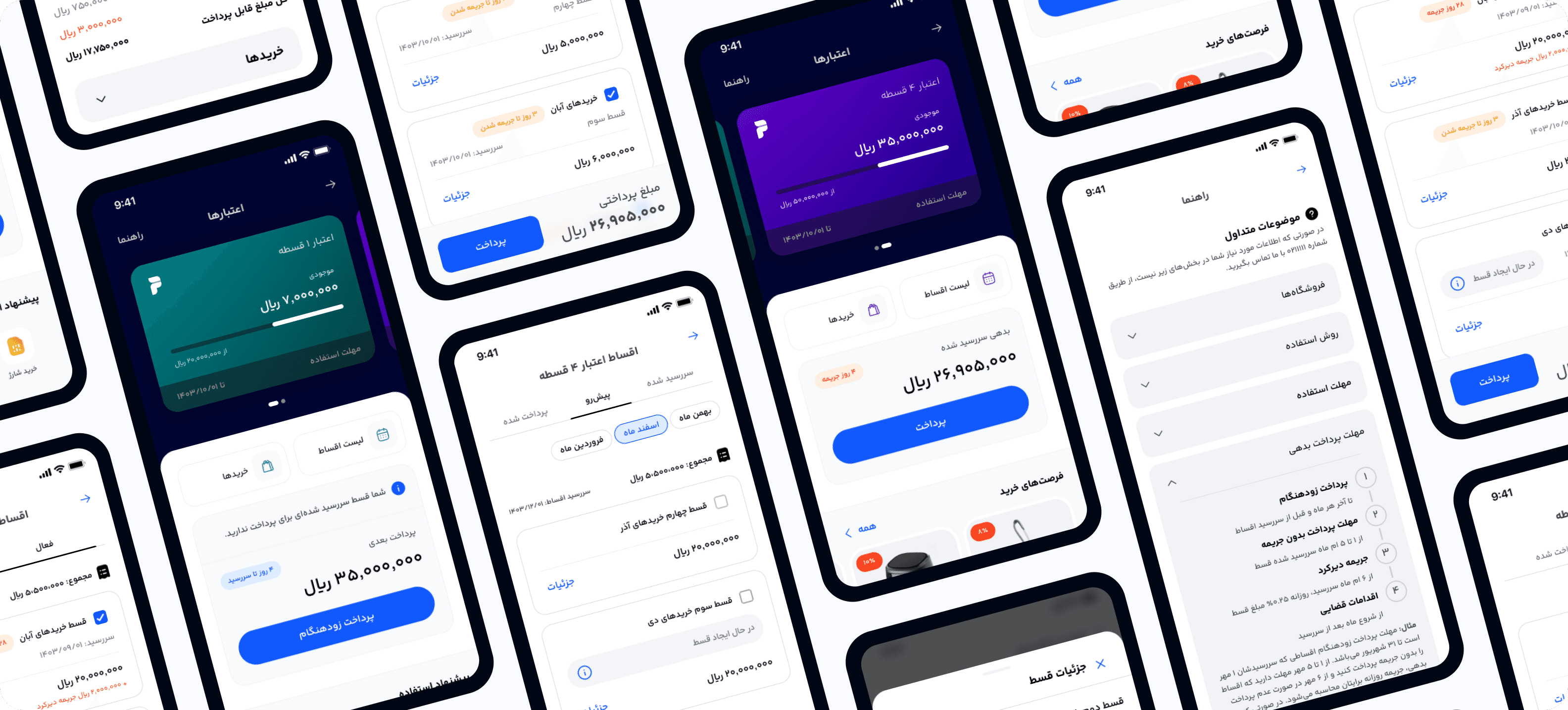
As the sole Product Designer within the Credit-Installments tribe, collaborating closely with cross-functional team members and supported by designers from adjacent tribes, I identified key usability gaps and critical user pain points across credit management and installment payment flows. Leveraging these insights, I led the redesign of both the BNPL credit home page and the installments list, with a strong focus on improving understandability, findability, and overall usability.
As the sole Product Designer within the Credit-Installments tribe, collaborating closely with cross-functional team members and supported by designers from adjacent tribes, I identified key usability gaps and critical user pain points across credit management and installment payment flows. Leveraging these insights, I led the redesign of both the BNPL credit home page and the installments list, with a strong focus on improving understandability, findability, and overall usability.
Problem Statements
Problem Statements
The Default Rate metric was approaching a critical threshold
Significant amount of users were paying their installments with delays and penalties
Most of the inquiries to the support team directly concerned installment details and payment schedules
The Default Rate metric was approaching a critical threshold
Significant amount of users were paying their installments with delays and penalties
Most of the inquiries to the support team directly concerned installment details and payment schedules
Discovery & Define
Discovery & Define
Research Planning & Strategy
Research Planning & Strategy
Main Goal
Main Goal
Understand why users struggle to manage and pay installments on time.
Understand why users struggle to manage and pay installments on time.
Key Research Questions
Key Research Questions
Where do users get confused and why?
What barriers prevent them from paying their installments quickly and easily?
What challenges do users encounter with their credit accounts and installments?
Where do users get confused and why?
What barriers prevent them from paying their installments quickly and easily?
What challenges do users encounter with their credit accounts and installments?
Limitations & Prioritization
Limitations & Prioritization
Due to budget and time constraints, and anticipating substantial design changes, we prioritized an experimental, risk-reduction approach centered around iterative usability validation.
Due to budget and time constraints, and anticipating substantial design changes, we prioritized an experimental, risk-reduction approach centered around iterative usability validation.
Generative Research Roadmap
Generative Research Roadmap
In the generative research phase, I applied a mixed-method triangulation strategy to ensure evidence depth despite constraints.
This included:
Behavioral analysis using Microsoft Clarity to identify likely friction hotspots.
Listening and analysing the recorded support calls (Voice of Customer) to surface top recurring questions.
Semi-structured hallway interviews, conducted with strict screening criteria to minimize bias and maintain data validity, aiming to understand mental models and root causes.
In the generative research phase, I applied a mixed-method triangulation strategy to ensure evidence depth despite constraints.
This included:
Behavioral analysis using Microsoft Clarity to identify likely friction hotspots.
Listening and analysing the recorded support calls (Voice of Customer) to surface top recurring questions.
Semi-structured hallway interviews, conducted with strict screening criteria to minimize bias and maintain data validity, aiming to understand mental models and root causes.
Evaluative Research Roadmap
Evaluative Research Roadmap
In the evaluative research phase, I designed a two-stage usability testing process:
An initial round using wireframe prototypes and guerrilla method to de-risk early concepts.
A structured, moderated main usability test with recruited real users to validate refined flows.
In the evaluative research phase, I designed a two-stage usability testing process:
An initial round using wireframe prototypes and guerrilla method to de-risk early concepts.
A structured, moderated main usability test with recruited real users to validate refined flows.
Behavioral Analysis via Microsoft Clarity
Behavioral Analysis via Microsoft Clarity
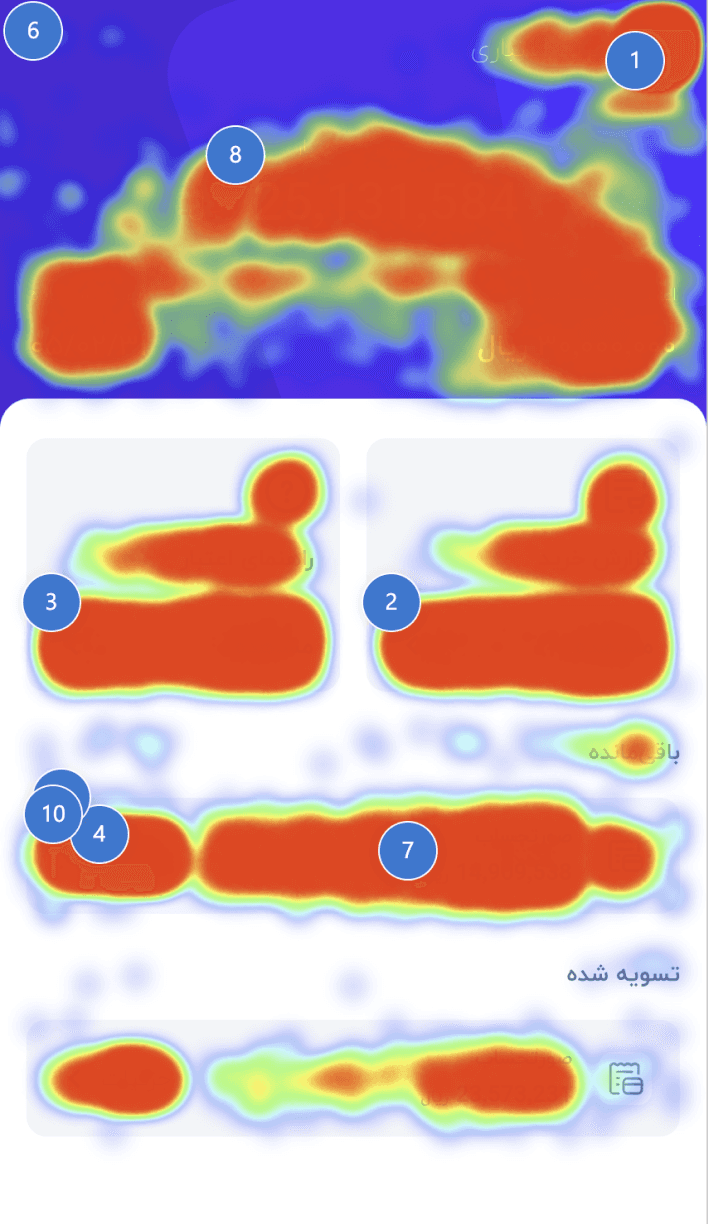
To better understand user behavior patterns and identify high-friction areas, I analyzed heatmaps and reviewed 200+ session recordings using Microsoft Clarity.
To better understand user behavior patterns and identify high-friction areas, I analyzed heatmaps and reviewed 200+ session recordings using Microsoft Clarity.
Key Observations
Key Observations
Users frequently opened and closed contract cards and repeatedly switched between contract details and the purchases list.
The purchases list attracted the most clicks on the page, and based on session recordings, it was also the area where users appeared most confused.
Users frequently opened and closed contract cards and repeatedly switched between contract details and the purchases list.
The purchases list attracted the most clicks on the page, and based on session recordings, it was also the area where users appeared most confused.
Support Call Analysis
Support Call Analysis
I listened to and analyzed +200 recorded customer support calls to answer these questions:
Which parts of the credit and installments lead users to contact support?
Which questions do they ask most frequently?
I listened to and analyzed +200 recorded customer support calls to answer these questions:
Which parts of the credit and installments lead users to contact support?
Which questions do they ask most frequently?
Data Analysis Process
Data Analysis Process
Captured each question as a FigJam sticky note while reviewing calls
Clustered similar questions (affinity mapping)
Prioritized clusters by frequency to surface top pain points
Captured each question as a FigJam sticky note while reviewing calls
Clustered similar questions (affinity mapping)
Prioritized clusters by frequency to surface top pain points
Frequent Questions
Frequent Questions
“Some installments appeared; how can I tell which purchases they correspond to?”
“How much do I need to pay next month?”
“How much time do I have to make my payment?”
“Some installments appeared; how can I tell which purchases they correspond to?”
“How much do I need to pay next month?”
“How much time do I have to make my payment?”
User Interview
User Interview
To dive deeper into the user challenges and uncover the underlying causes behind these issues, my next objective was to address the following questions:
What challenges and pain points do users face with their credits and installments?
What concerns do they have about their purchases, credits, and installment plans?
What information do they most often search for in these sections?
To dive deeper into the user challenges and uncover the underlying causes behind these issues, my next objective was to address the following questions:
What challenges and pain points do users face with their credits and installments?
What concerns do they have about their purchases, credits, and installment plans?
What information do they most often search for in these sections?
Participants and Screening
Participants and Screening
I identified 15 colleagues who met these criteria:
Actively use credit and manage their own installment repayments
Have had delayed installment repayments
Have no prior experience working on the credit team
I identified 15 colleagues who met these criteria:
Actively use credit and manage their own installment repayments
Have had delayed installment repayments
Have no prior experience working on the credit team
Some of the Interview Questions
Some of the Interview Questions
"When did you check your installments last time? Why? What happened?"
"When was the last time you repaid your installments late? Why? How did you feel? What did you do?"
"Tell me about a time you felt unsure or stuck while trying to pay or review installments. What happened?"
"Have you ever felt confused about your credit?"
"When did you check your installments last time? Why? What happened?"
"When was the last time you repaid your installments late? Why? How did you feel? What did you do?"
"Tell me about a time you felt unsure or stuck while trying to pay or review installments. What happened?"
"Have you ever felt confused about your credit?"
Data Analysis Process
Data Analysis Process
Audio recording
Structured note-taking framework
Coding the recorded sessions
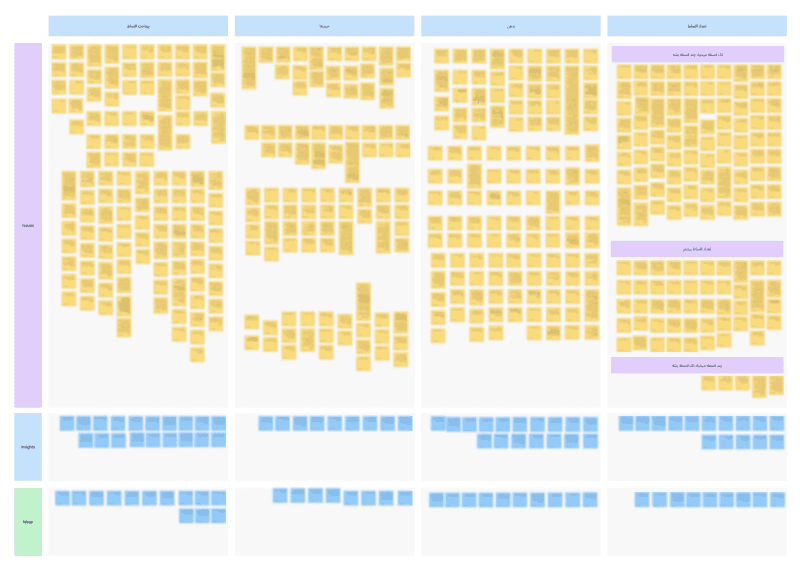
Affinity Mapping
Audio recording
Structured note-taking framework
Coding the recorded sessions
Affinity Mapping
Key Insights
Key Insights
13/15 said understanding and categorizing their installments was confusing.
11/15 want to know exactly how much they must pay each month so they can budget their expenses
10/15 didn’t understand which purchases their installments corresponded to
13/15 said understanding and categorizing their installments was confusing.
11/15 want to know exactly how much they must pay each month so they can budget their expenses
10/15 didn’t understand which purchases their installments corresponded to
Prioritized Objectives
Prioritized Objectives
We systematically prioritized the researh insights based on two criteria:
Frequency of occurrence across different research inputs.
Impact on the core business goal, which was the installment payment completion.
We systematically prioritized the researh insights based on two criteria:
Frequency of occurrence across different research inputs.
Impact on the core business goal, which was the installment payment completion.
Tier 1 Priority Objectives (Critical Path Goals)
Tier 1 Priority Objectives (Critical Path Goals)
Enable users to intuitively understand and calculate their upcoming monthly payments.
Clearly break down how each installment amount maps to specific purchases.
Ensure users can immediately recognize whether they have any overdue installments.
Enable users to intuitively understand and calculate their upcoming monthly payments.
Clearly break down how each installment amount maps to specific purchases.
Ensure users can immediately recognize whether they have any overdue installments.
Tier 2 Priority Objectives
Tier 2 Priority Objectives
Clearly and intuitively showing the installments' prioritization.
Transparently display the payment status of each installment.
Clearly and intuitively showing the installments' prioritization.
Transparently display the payment status of each installment.
Tier 3 Priority Objectives
Tier 3 Priority Objectives
Clarify key credit information, including total credit amount, remaining balance, expiration date, and credit status.
Clearly communicate when penalties begin and how they are calculated.
Clarify key credit information, including total credit amount, remaining balance, expiration date, and credit status.
Clearly communicate when penalties begin and how they are calculated.
Initial Ideation & Evaluation
Initial Ideation & Evaluation
Brainstorming
Brainstorming
I led a workshop alongside the team and fellow designers, to rapidly generate and evaluate solution ideas, ultimately selecting the top concepts to prototype and test.
I led a workshop alongside the team and fellow designers, to rapidly generate and evaluate solution ideas, ultimately selecting the top concepts to prototype and test.
Old Design
Old Design
Wireframe Design
Wireframe Design
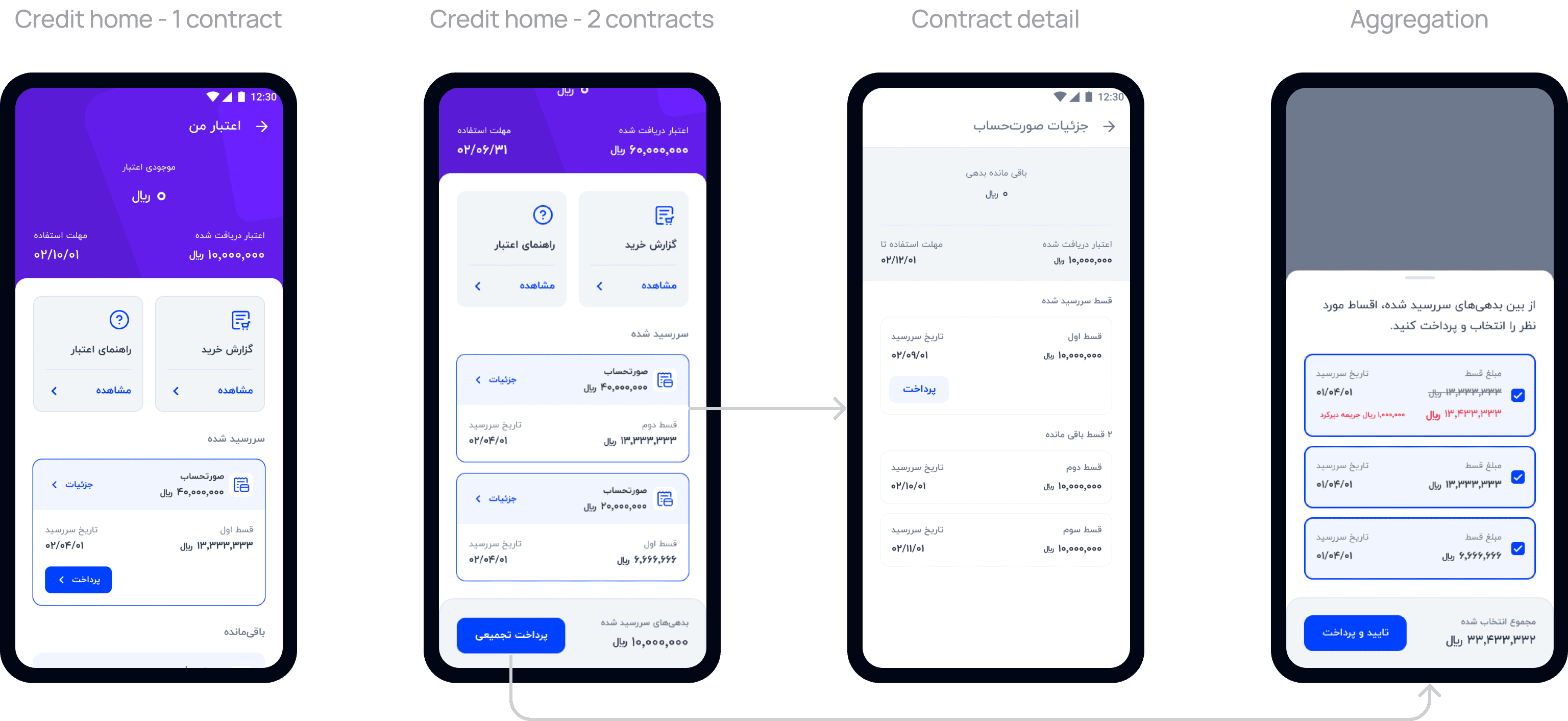
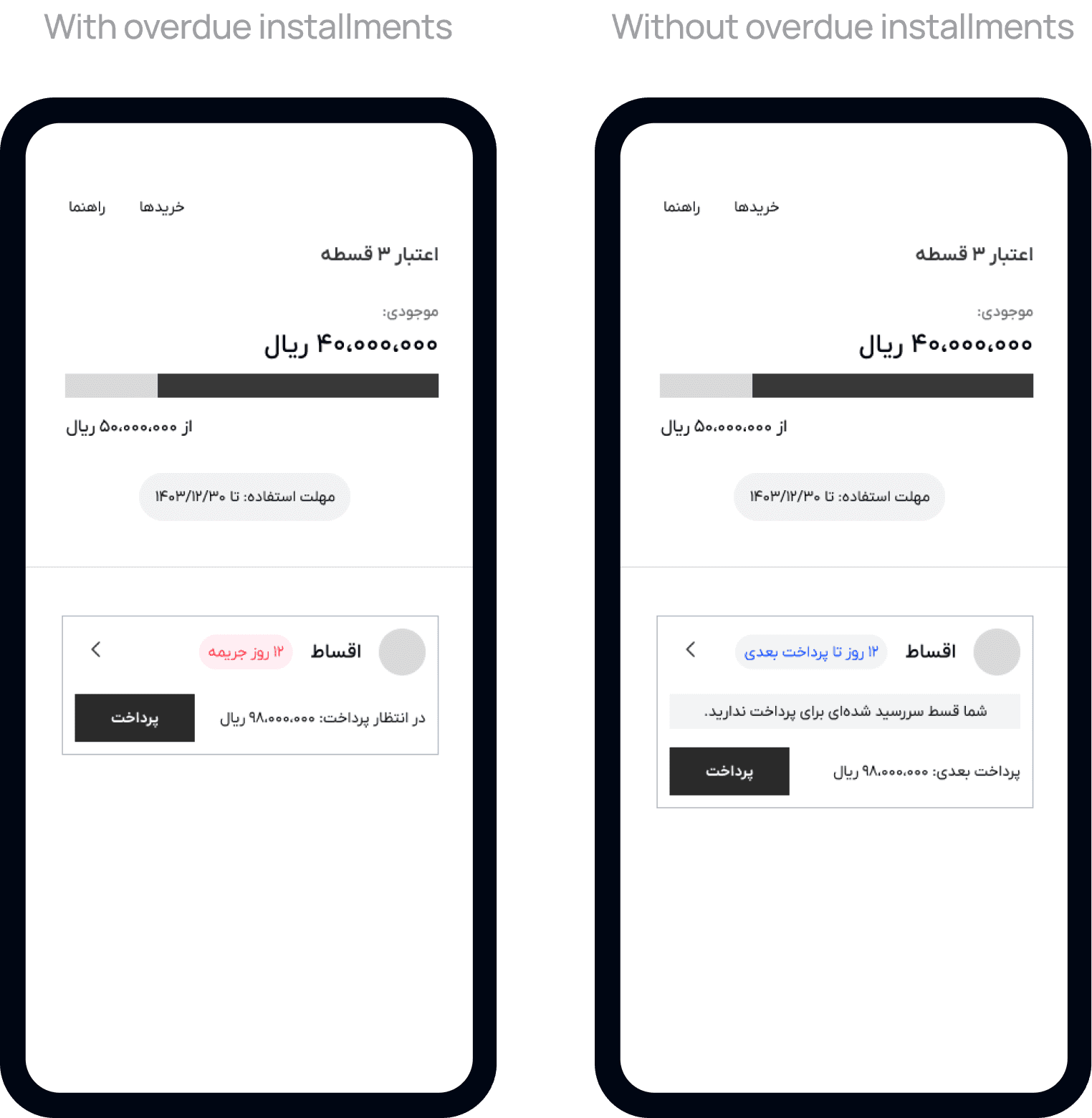
4Pay Credit Home page
4Pay Credit Home page
Display the concisely summarized installments’ due status and the total amount of overdue ones.
Provide an option to promptly pay the total amount of overdue installments, as well as to view details if needed.
Display the concisely summarized installments’ due status and the total amount of overdue ones.
Provide an option to promptly pay the total amount of overdue installments, as well as to view details if needed.
Installments’ List
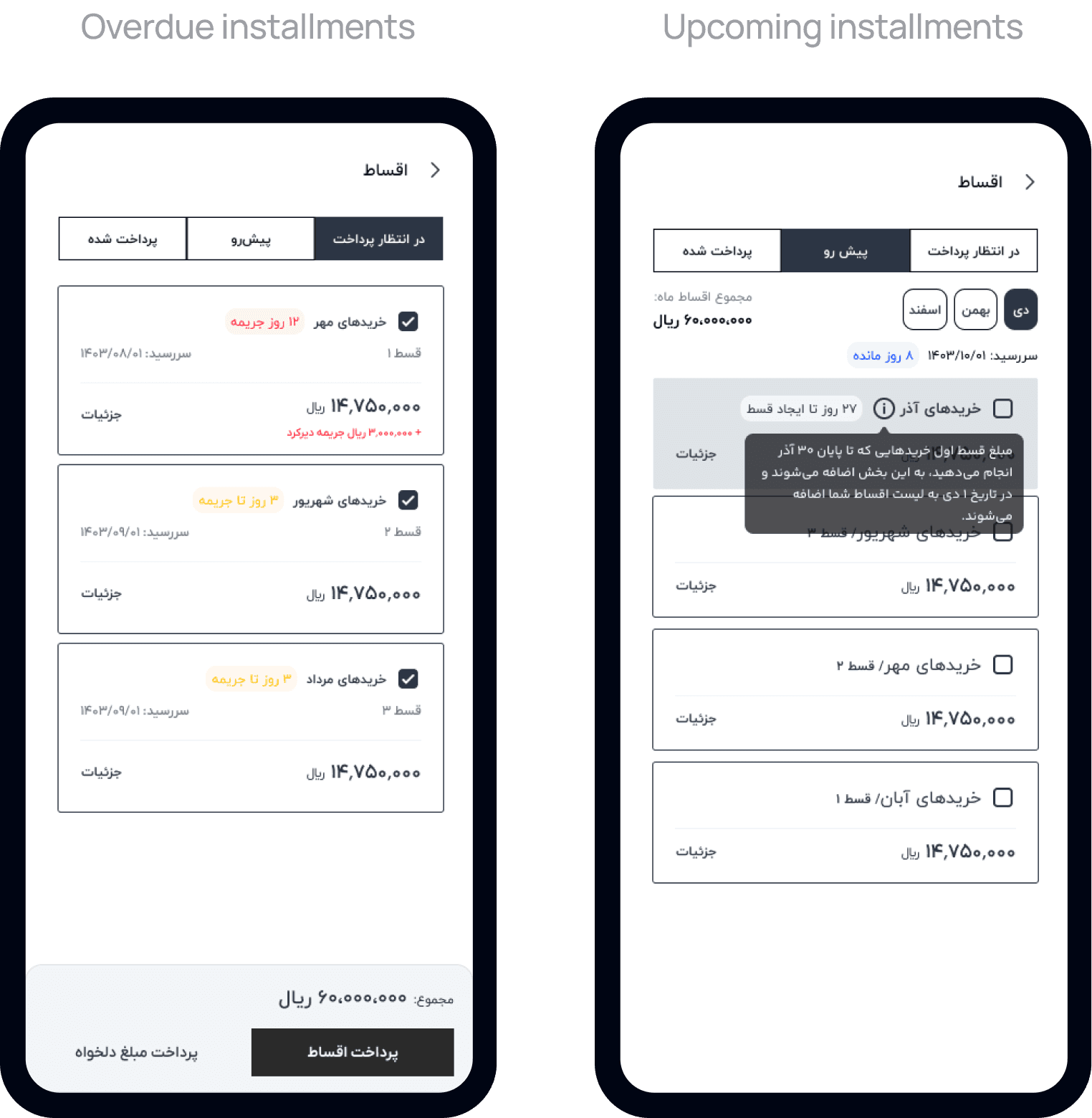
Installments’ List
Clearly distinguish and prioritize overdue installments.
Display each installment’s penalty status alongside its payment deadline.
Show the total amount due for installments in each upcoming month.
Clearly distinguish and prioritize overdue installments.
Display each installment’s penalty status alongside its payment deadline.
Show the total amount due for installments in each upcoming month.
Installment Detail
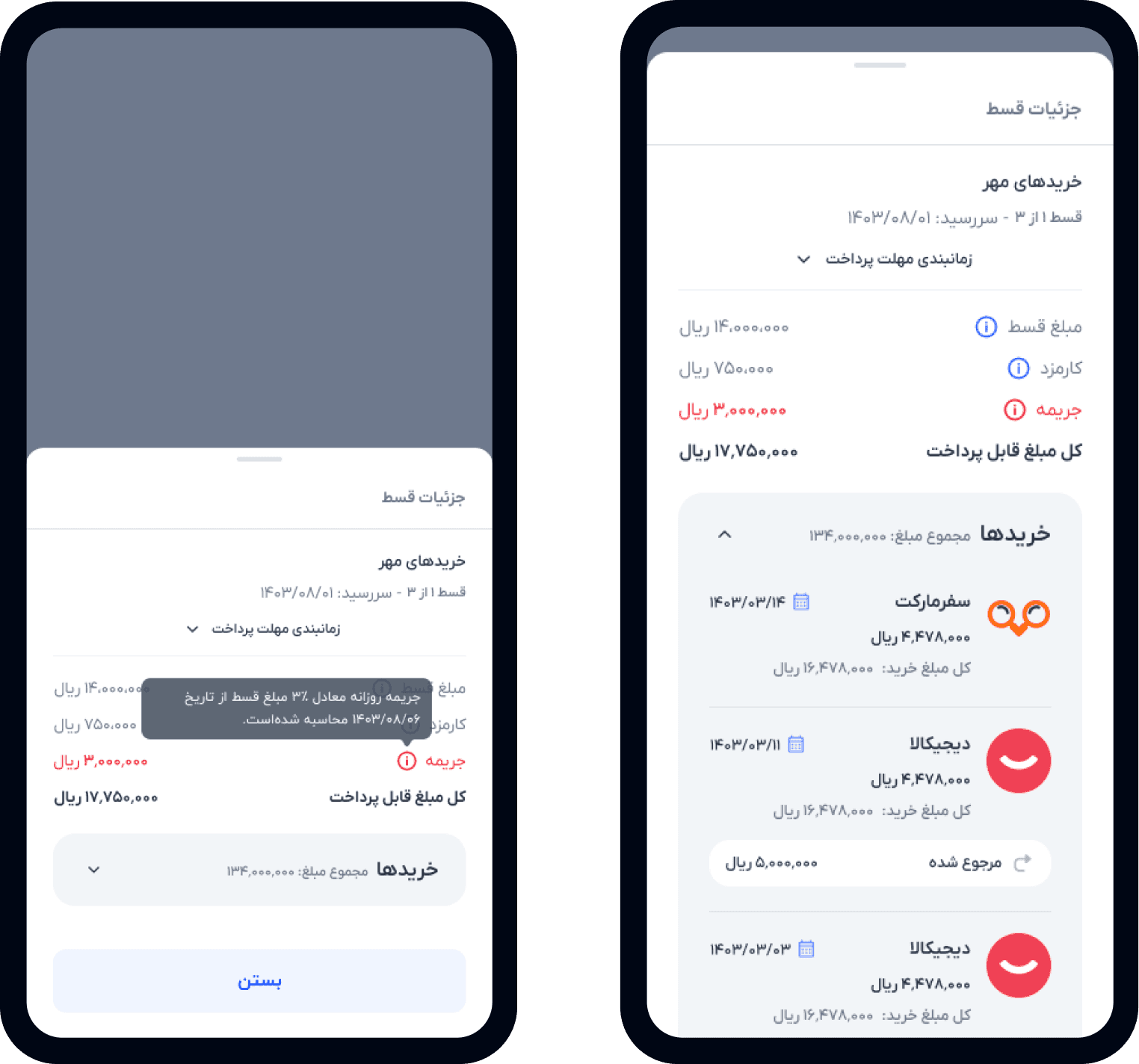
Installment Detail
Clearly communicate the penalty start date and calculation logic
Inform the users about how different purchases contribute to the total amount of each installment.
Clearly communicate the penalty start date and calculation logic
Inform the users about how different purchases contribute to the total amount of each installment.
Initial Usability Testing & Iteration
Initial Usability Testing & Iteration
I conducted an initial round of usability testing using high-fidelity wireframe prototypes, which surfaced several usability issues across key flows.
I conducted an initial round of usability testing using high-fidelity wireframe prototypes, which surfaced several usability issues across key flows.
Core Scenarios & Tasks
Core Scenarios & Tasks
Participants were asked to complete a set of high-priority tasks:
Identify overdue installments: “You enter the Credit section to check your installment status. How much do you need to pay right now for overdue installments?”
Check next month’s total due: “Now, how much will you need to pay next month?”
Map overdue installments to purchases: “Which purchases are your overdue installments related to?”
Participants were asked to complete a set of high-priority tasks:
Identify overdue installments: “You enter the Credit section to check your installment status. How much do you need to pay right now for overdue installments?”
Check next month’s total due: “Now, how much will you need to pay next month?”
Map overdue installments to purchases: “Which purchases are your overdue installments related to?”
Data Capture & Synthesis
Data Capture & Synthesis
Used a structured note-taking framework during sessions to capture observed behaviors, confusion points, and user questions.
After testing, I identified recurring issues across participants and documented them as key findings.
Shared the observations and our hypotheses in a team session, then prioritized the simplest, lowest-effort design changes to address the most repeated problems before moving forward.
Used a structured note-taking framework during sessions to capture observed behaviors, confusion points, and user questions.
After testing, I identified recurring issues across participants and documented them as key findings.
Shared the observations and our hypotheses in a team session, then prioritized the simplest, lowest-effort design changes to address the most repeated problems before moving forward.
3 of 6 participants
Issue
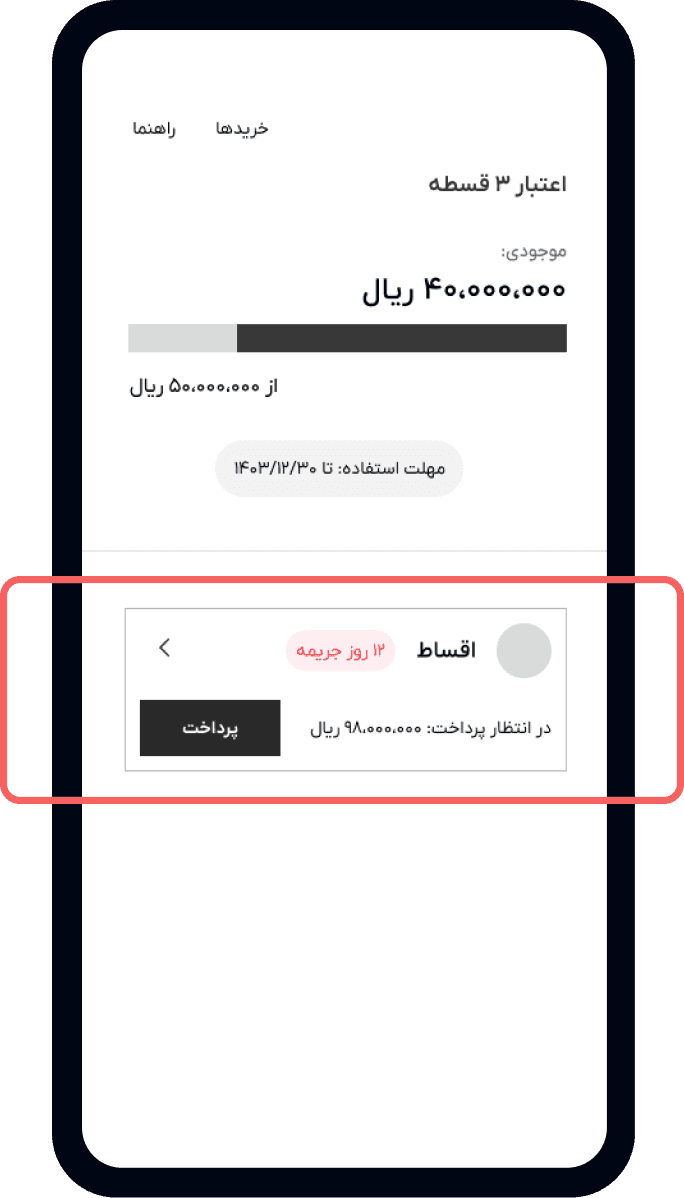
Users didn’t realize the installments overview card was clickable; they tapped the “Pay” button to access their installment list.
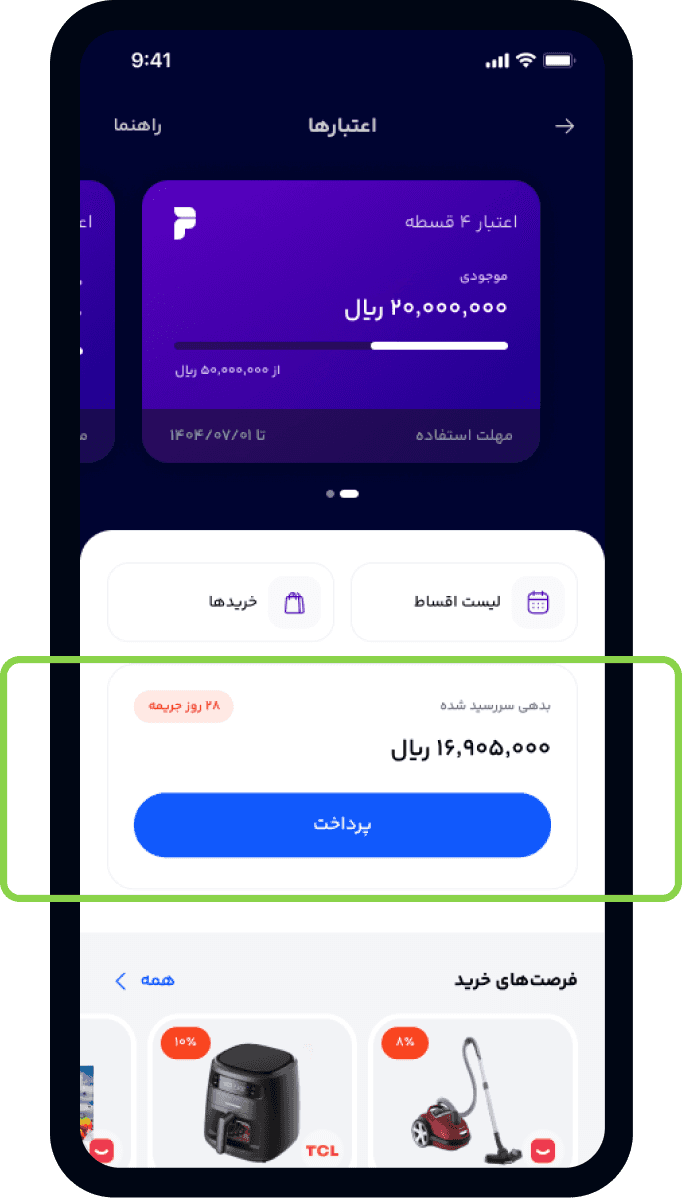
Solution
Separate the payment card from the installments list by presenting them as two distinct, clearly labeled components.
3 of 6 participants
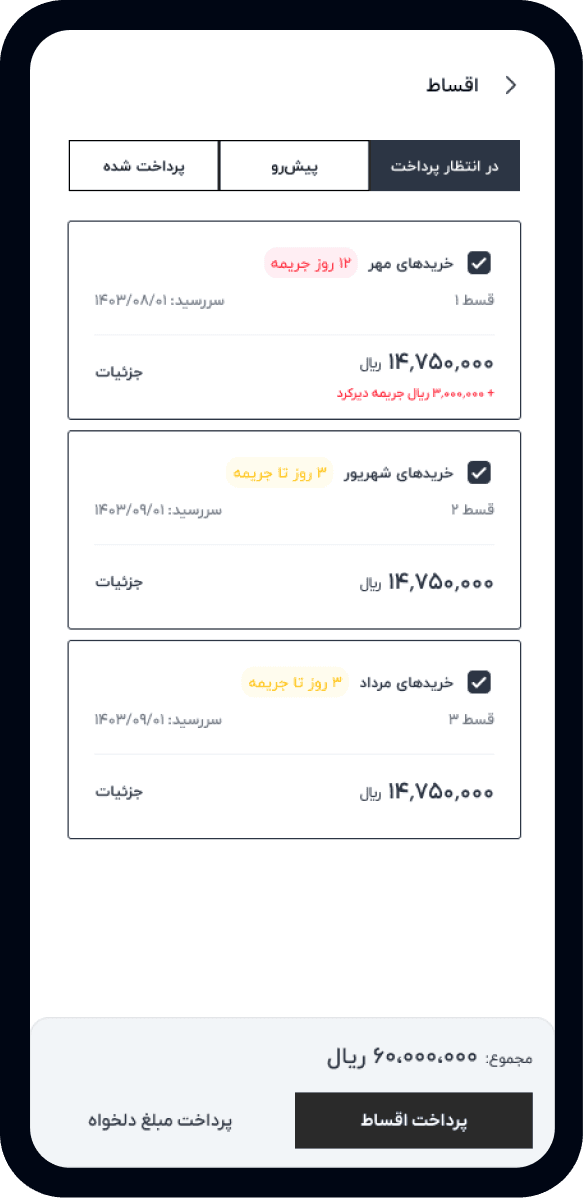
Issue
Users are unclear about whether the installments are overdue or upcoming.
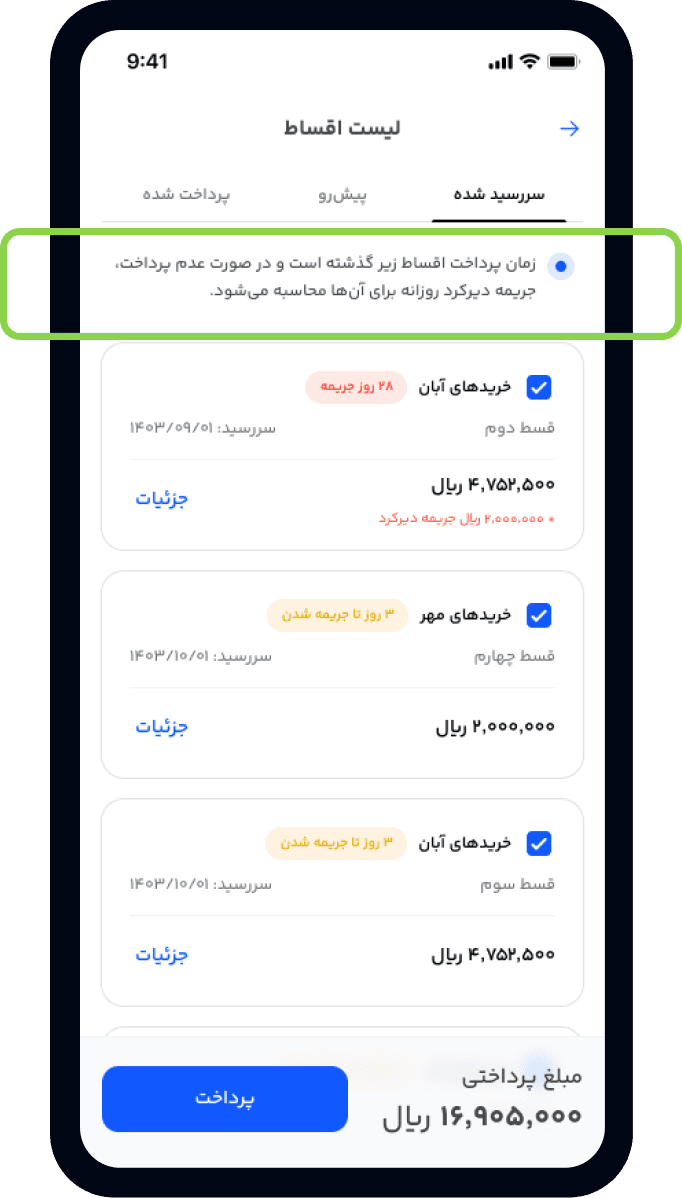
Solution
Add clear, supporting text at the top of them.
Main Evaluation & Refinements
Main Evaluation & Refinements
Moderated Usability Testing
Moderated Usability Testing
I conducted in-person, moderated usability testing sessions with 13 participants who actively used Credit and paid their installments.
I conducted in-person, moderated usability testing sessions with 13 participants who actively used Credit and paid their installments.
Participants Recruitment
Participants Recruitment
I worked with the Data team to generate a list of eligible users based on these criteria:
Users of credit for at least 3 months
Had completed installment payments
Were located in Tehran (for in-person testing)
I organized the user list (name + phone number) in Google Sheets and shared it with the Support team along with a call script for participant invitation, and planned one full test day with 20-minute time slots. To increase throughput and avoid missed sessions, I reserved 2 rooms and prepared a colleague to run a parallel session if needed.
I worked with the Data team to generate a list of eligible users based on these criteria:
Users of credit for at least 3 months
Had completed installment payments
Were located in Tehran (for in-person testing)
I organized the user list (name + phone number) in Google Sheets and shared it with the Support team along with a call script for participant invitation, and planned one full test day with 20-minute time slots. To increase throughput and avoid missed sessions, I reserved 2 rooms and prepared a colleague to run a parallel session if needed.
Attendance Risk Management
Attendance Risk Management
Based on previous experience with no-shows, I used an over-recruitment strategy and asked the Support team to continue outreach until 30 users confirmed attendance.
Participants were:
Reconfirmed by phone one day before the test
Sent an SMS reminder on the test day with their time slot and address
Based on previous experience with no-shows, I used an over-recruitment strategy and asked the Support team to continue outreach until 30 users confirmed attendance.
Participants were:
Reconfirmed by phone one day before the test
Sent an SMS reminder on the test day with their time slot and address
Pre-Test Survey
Pre-Test Survey
To establish a quantitative baseline and capture existing user sentiment, participants completed a pre-test attitudinal survey prior to the usability sessions.
The survey included the standard Net Promoter Score (NPS) question:
“Considering your current experience with DigiPay Credit, how likely are you to recommend our credit services to friends or family?”
This baseline enabled a more accurate comparison of user satisfaction before and after exposure to the redesigned experience.
To establish a quantitative baseline and capture existing user sentiment, participants completed a pre-test attitudinal survey prior to the usability sessions.
The survey included the standard Net Promoter Score (NPS) question:
“Considering your current experience with DigiPay Credit, how likely are you to recommend our credit services to friends or family?”
This baseline enabled a more accurate comparison of user satisfaction before and after exposure to the redesigned experience.
Test Scenario
Test Scenario
Participants were given the following scenario at the beginning of each session:
“Please imagine you have used the two types of your credits over the past months, and you’ve just opened the DigiPay application. I will now ask you to complete a series of tasks, please think aloud as you go, and tell me what you expect to see or where you’d tap at each step.”
Participants were given the following scenario at the beginning of each session:
“Please imagine you have used the two types of your credits over the past months, and you’ve just opened the DigiPay application. I will now ask you to complete a series of tasks, please think aloud as you go, and tell me what you expect to see or where you’d tap at each step.”
Tasks
Tasks
"You want to check whether you have any overdue installments to pay."
"You want to check whether you have any overdue installments to pay."
(Reminder: Do they check both credits?)
(Reminder: Do they check both credits?)
"For your 4-installment credit, determine exactly which installments are due right now."
"For your 4-installment credit, determine exactly which installments are due right now."
"Find out how much you need to pay in total for installments due next month."
"Find out how much you need to pay in total for installments due next month."
"What differences do you notice between these installments?"
"What differences do you notice between these installments?"
(Reminder: Do they notice the creating installment?)
(Reminder: Do they notice the creating installment?)
"What do you think this the "creating installment" is?"
"What do you think this the "creating installment" is?"
(Reminder: What they think? Will they understand the tooltip?)
(Reminder: What they think? Will they understand the tooltip?)
"Now, you want to check the status of your single-installment credit and see if you have any overdue installments to pay."
"Now, you want to check the status of your single-installment credit and see if you have any overdue installments to pay."
(Reminder: Do they understand that they should scroll the cards?)
(Reminder: Do they understand that they should scroll the cards?)
Post-Test Interview
Post-Test Interview
Following task completion, I conducted a short debrief interview to assess the perceived impact of the new designs and capture qualitative feedback.
Key questions included:
Following task completion, I conducted a short debrief interview to assess the perceived impact of the new designs and capture qualitative feedback.
Key questions included:
"What do you think about these new designs?"
"What do you think about these new designs?"
"Was anything unclear or confusing during the test?"
"Was anything unclear or confusing during the test?"
"Considering these new designs, on a scale of 1 to 10, how likely are you to recommend DigiPay Credit to friends or family?"
"Considering these new designs, on a scale of 1 to 10, how likely are you to recommend DigiPay Credit to friends or family?"
Scored less than 10: "What influenced you to give a lower score?"
Scored 10: "What aspects of the design stood out positively for you?"
Scored less than 10: "What influenced you to give a lower score?"
Scored 10: "What aspects of the design stood out positively for you?"
Do you have any suggestions or criticisms?
Do you have any suggestions or criticisms?
Is there anything else you would like to say?
Is there anything else you would like to say?
Participant Appreciation
Participant Appreciation
As a thank-you for participation, users who attended the test received a wallet credit incentive after their session
A thank-you SMS was also sent to confirm the reward and appreciate their participation
As a thank-you for participation, users who attended the test received a wallet credit incentive after their session
A thank-you SMS was also sent to confirm the reward and appreciate their participation
Analysis & Iteration
Analysis & Iteration
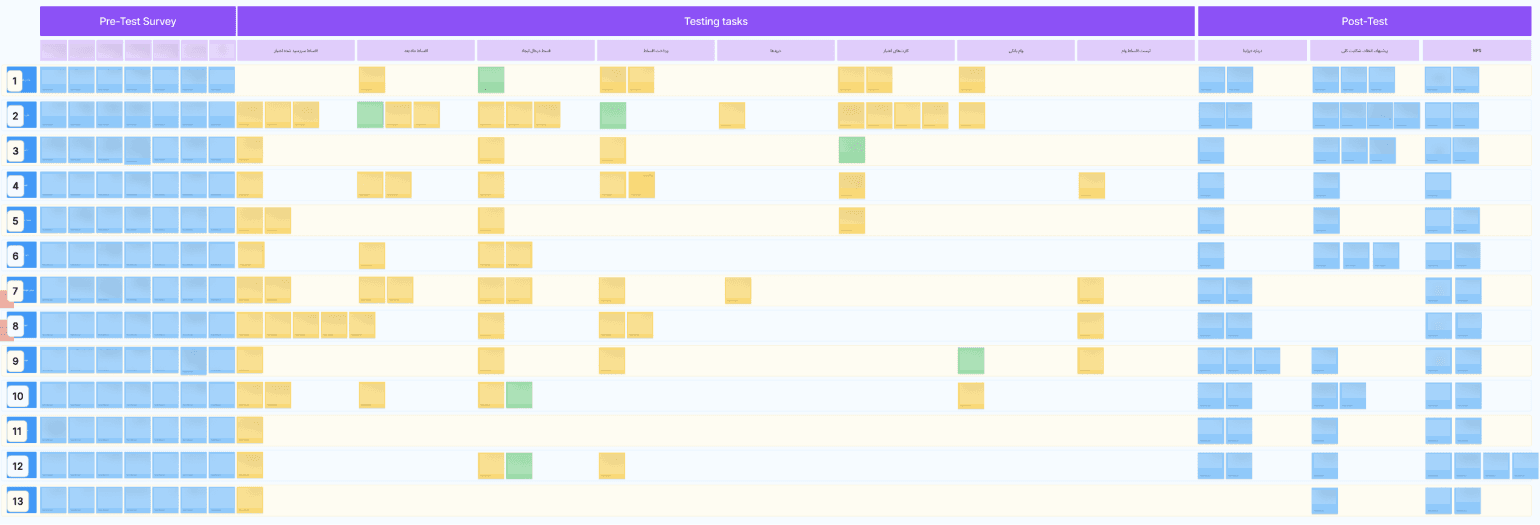
I cathegorized and analyzed the results, and solved the most frequent and critical issues in the next iterations.
I cathegorized and analyzed the results, and solved the most frequent and critical issues in the next iterations.
6 of 13 participants
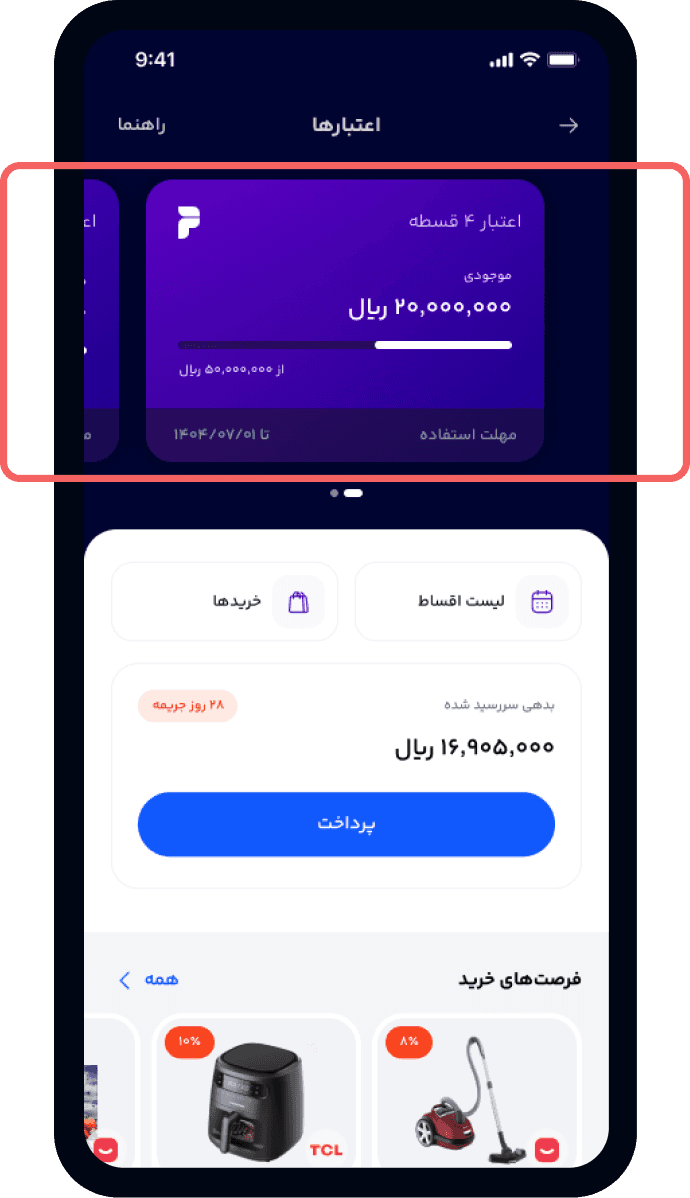
Issue
Users intuitively tapped the credit card overview to access their installment list, expecting it to be linked.
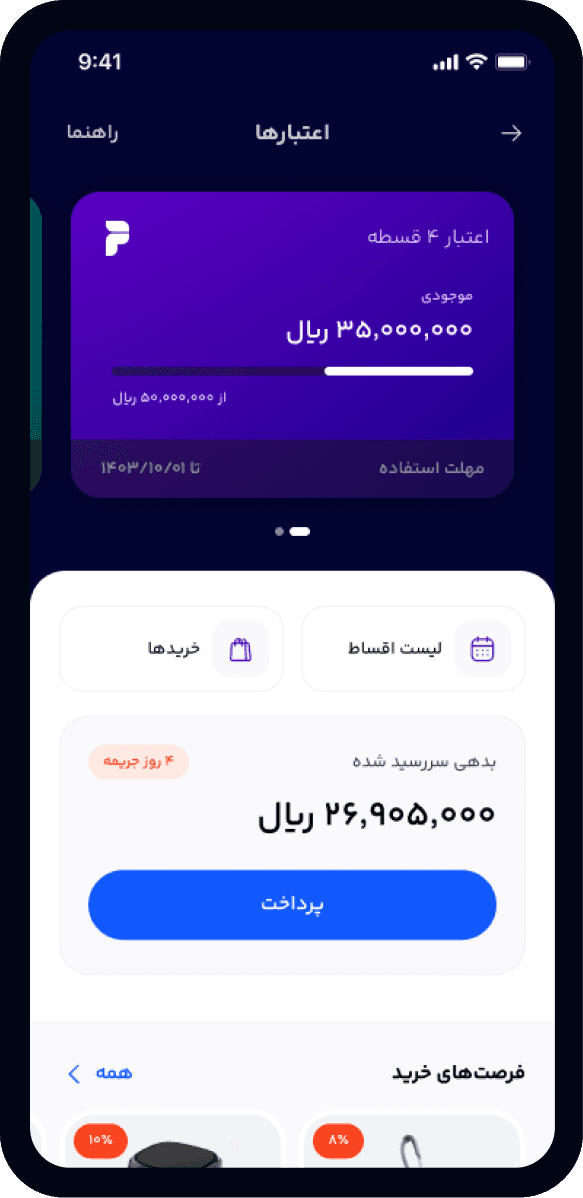
Solution
Made the card itself clickable, linking it directly to the installments list.
4 of 13 participants
Issue
Users didn’t notice that horizontally scrolling the credit cards also updated the content below; they assumed the installment list applied to both credit types.
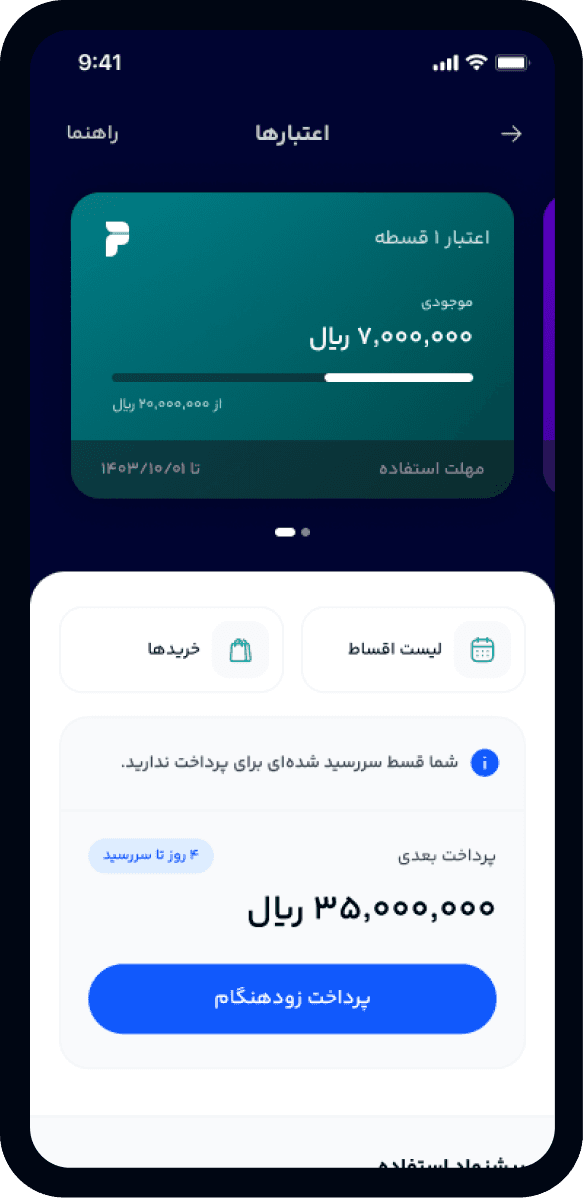
Solutions
Differentiate card types by applying distinct color schemes and matching icon accents for each credit.
Introduce subtle motion in the bottom section, so it visibly updates as users scroll through the cards.
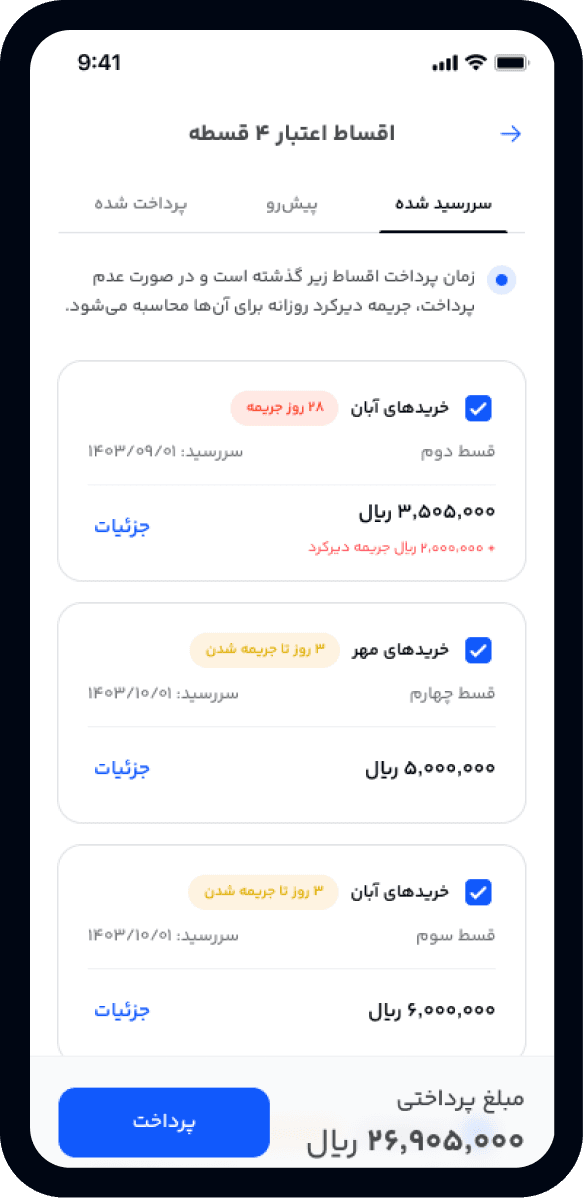
Add clear section titles ( “4-Installment Credit” and “1-Installment Credit”) above the installments list to reinforce which credit type is being displayed.
Next Steps
Next Steps
Given the scope and risk level of these changes, a phased rollout strategy is necessary. The redesigned UI and the existing experience will run in parallel, with exposure controlled through feature flags. A real-time monitoring dashboard will be established, alongside clearly defined KPI guardrails to detect potential regressions early.
Primary KPIs include:
Installment Payment Completion Rate
Average payment time-on-task
On-time payment rate
Given the scope and risk level of these changes, a phased rollout strategy is necessary. The redesigned UI and the existing experience will run in parallel, with exposure controlled through feature flags. A real-time monitoring dashboard will be established, alongside clearly defined KPI guardrails to detect potential regressions early.
Primary KPIs include:
Installment Payment Completion Rate
Average payment time-on-task
On-time payment rate
Impacts
Impacts
User Satisfaction
User Satisfaction
As mentioned earlier, users were asked both before and after the usability test to rate, on a scale from 1 to 10, how likely they were to recommend the product to their friends or colleagues. The results showed that the average NPS increased after the usability testing with the redesigned experience.
As mentioned earlier, users were asked both before and after the usability test to rate, on a scale from 1 to 10, how likely they were to recommend the product to their friends or colleagues. The results showed that the average NPS increased after the usability testing with the redesigned experience.
Payment Rate
Payment Rate
In this version, we removed as many friction points as possible from the installment payment flow. All stages of the user journey، including viewing upcoming installments, identifying overdue payments, understanding installment details, and selecting installments for payment، were made more understandable and accessible. As a result, the experience is expected to increase the on-time installment payment rate.
In this version, we removed as many friction points as possible from the installment payment flow. All stages of the user journey، including viewing upcoming installments, identifying overdue payments, understanding installment details, and selecting installments for payment، were made more understandable and accessible. As a result, the experience is expected to increase the on-time installment payment rate.
Operational Cost
Operational Cost
Improvements in understandability and findability within this section are expected to significantly reduce the volume of monthly support inquiries, ultimately lowering operational costs for the business.
Improvements in understandability and findability within this section are expected to significantly reduce the volume of monthly support inquiries, ultimately lowering operational costs for the business.